
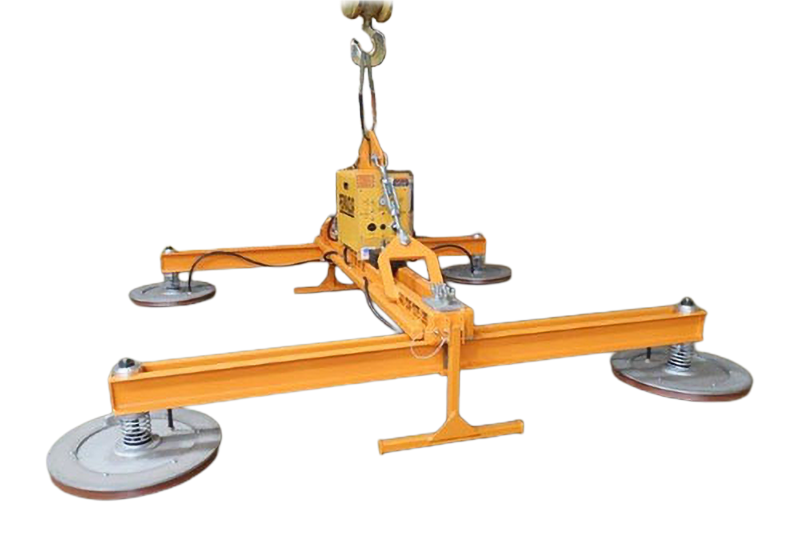

Permadur Vacuum Lifting Systems
Versatility beyond steel
Product Description
Overview
Permadur Vacuum Lifting Systems provide safe, efficient handling of non-ferrous and delicate materials. Designed for glass, steel, aluminum, composites, sheet goods, they feature custom pad arrangements to suit unique requirements. Powered by electric, air, or battery, these systems reduce operator strain while preventing surface damage.
Key Benefits
- Handles glass, aluminum, composites, and thick steel plate
- Prevents surface damage; reduces operator strain
- Available in electric, air, or battery-powered models
- Custom pad arrangements for unique load shapes
- Permadur Vacuum Lifting Systems also utilizes plate up-enders so operators can safely grip flat materials and rotate them between horizontal and vertical positions, reducing manual effort and increasing safety.
Models
Custom design based on application.
Use Cases
Perfect for glass plants, composite manufacturers, and non-ferrous material handling applications.
Many facilities store plate and sheet material in an upright position to conserve floor space. Plate up-enders enable vacuum lifting systems to safely transfer material from vertical storage to horizontal tables or processing equipment, ensuring controlled handling, reduced risk, and improved operational efficiency.
Media
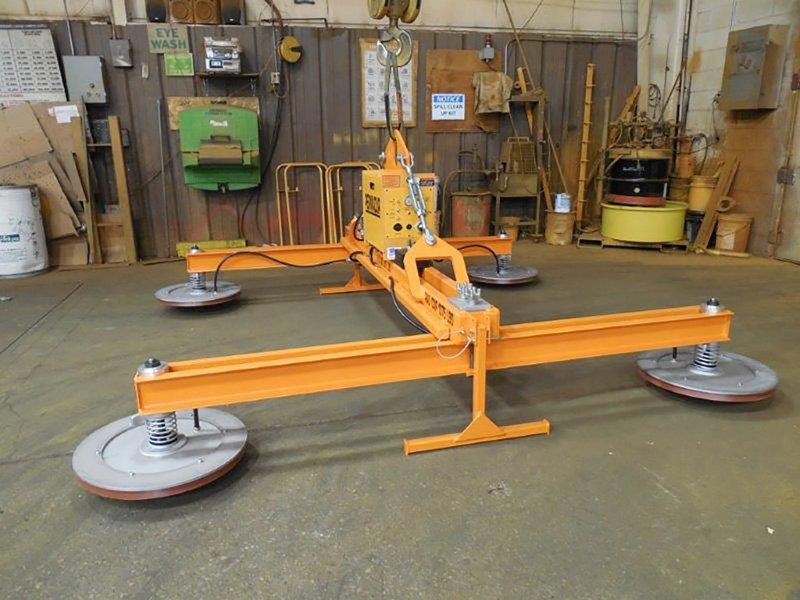
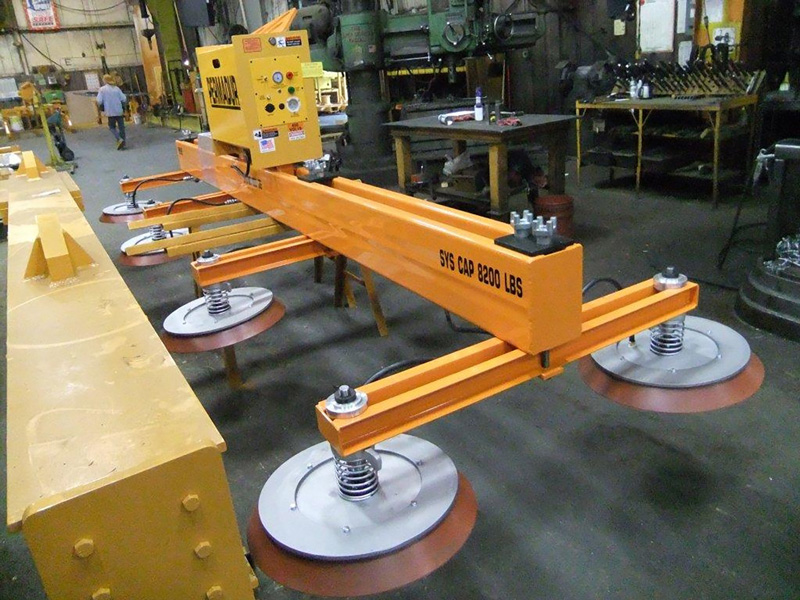
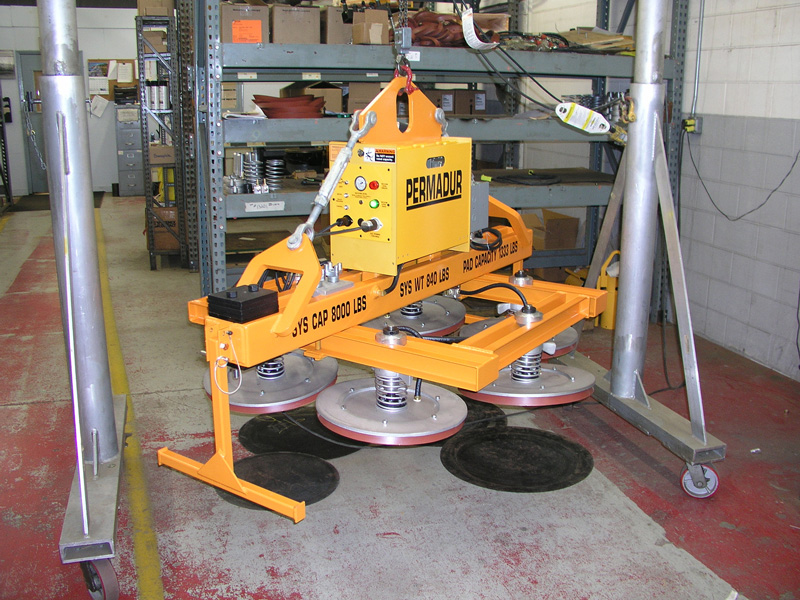
Click to view full-size images.
Related From our Blog
How Vacuum Lift Systems Reduce Spinal Load and Improve Safety in Industrial Plate Handling
In your day-to-day material handling operations, lifting heavy or bulky steel plates isn't just...
Choosing Between Large and Small Plate Vacuum Lifting Systems: Which Is Right for Your Application?
Every day, you're faced with lifting decisions that go beyond just getting the job done—they...
Frustrated by Frequent Seal Failures? Effective Strategies to Extend Vacuum Lifter Seal Life
Seal leaks halt production, frustrate staff, and strain budgets. One bad pad can stop an entire...
Problem / Cause / solution / benefit
Problem
Many fabrication shops, industrial worksites, and manufacturing facilities struggle when handling heavy steel plates, metal sheets, stone slabs, glass panels, or other large, flat materials. Manual lifting, slings, chains, or clamps tend to be slow, labor-intensive, risky, and often demand more than one worker. These methods increase the chance of injury, material damage (scratches, dents, chips), and workplace downtime — especially when handling large or awkward loads.
Cause
Because traditional rigging relies on manual labor or mechanical clamps and hooks, every lift requires careful placement, secure fastening, multiple hands, and often extensive setup time. Surface-contact methods can damage smooth or flat materials; adjustments or readjustments are often needed; and repetitive lifting puts strain on workers, raising risks of musculoskeletal injury while limiting throughput and turnaround.
Solution
Permadur’s Vacuum Lifting Systems use suction-based lifting technology — creating a vacuum seal between suction pads (or suction beams) and the workpiece. A vacuum pump (or other vacuum generator) removes air between the suction pads and the material, generating a firm, secure grip that holds the load, even through vertical lifts or moves. Because the system grips without clamps or hooks, a single operator can safely lift, rotate, or reposition heavy loads — without slings, chains, or excessive rigging — minimizing material contact and eliminating the need for redundant labor or cumbersome mechanical rigging.
Benefit
Using Permadur Vacuum Lifting Systems transforms material-handling operations: lifting becomes faster, smoother, and far less labor-intensive. Workpieces are less likely to get damaged (no scratches or dents), and even heavy or large items can be handled by one operator — freeing up manpower. Worker safety increases because risk of injury from manual lifting or awkward rigging is dramatically reduced, and repetitive-lifting strain is eliminated. Productivity rises as lifts, moves, and placements happen quicker and with greater precision — reducing downtime, minimizing rework or scrap, and lowering overall handling costs.